
Woman in Maritime
The Importance of Gender Balance in Maritime INDUSTRY
There is substantial evidence supporting the idea that investing in women is one of the most effective ways to foster the development of communities, organizations, and even entire nations. Countries that embrace gender equality tend to experience more robust economic growth, while companies with greater female representation in leadership positions consistently outperform their counterparts. Furthermore, peace agreements that include women are proven to be more durable, and parliaments with a higher proportion of women pass more legislation addressing critical social issues, including health, education, anti-discrimination, and child welfare.
The evidence is clear: achieving gender equality contributes to progress for all.
Women in Maritime IMO’s Gender Programme
Currently, women constitute only 1.2% of the global seafaring workforce, as reported by the BIMCO/ICS 2021 Seafarer Workforce Report. This figure represents a positive trend in gender balance, with 24,059 women now serving as seafarers—an increase of 45.8% from the 2015 report. However, the maritime industry remains predominantly male, and in this context, the International Maritime Orga nization (IMO) has been actively working to advance gender equality and support women in achieving representation that aligns with contemporary expectations.
Through its Women in Maritime programme, the IMO has adopted a strategic approach to enhancing the role of women as vital stakeholders in maritime development. The programme, under the slogan “Training-Visibility-Recognition,” seeks to increase the visibility of women, provide training opportunities, and recognize their contributions within the industry. IMO is deeply committed to supporting women in both shore-based and sea-going roles.
Moreover, the IMO is dedicated to assisting its Member States in achieving the United Nations 2030 Agenda for Sustainable Development and its 17 Sustainable Development Goals (SDGs), particularly Goal 5: “Achieve gender equality and empower all women and girls.”
The IMO’s gender programme was launched in 1988, at a time when few maritime training institutes admitted female students. Since then, the IMO has established an institutional framework to integrate gender considerations into its policies and procedures, enabling greater access to maritime training and employment opportunities for women in the sector.
How IMO is Supporting Women in the Maritime Sector
The IMO actively promotes gender equality and women’s empowerment through a variety of initiatives. These include offering gender-specific fellowships, facilitating access to high-level technical training for women in maritime sectors in developing countries, and creating environments in which women are identified and selected for career development opportunities within maritime administrations, ports, and training institutions. Additionally, the IMO supports the formation of professional women’s associations in the maritime field, especially in developing countries.
Women in Maritime Associations
The IMO has been instrumental in the establishment of Women in Maritime Associations (WIMAs) across different regions, aimed at enhancing gender balance within the shipping industry. These regional networks provide a platform for women to discuss not only gender-related issues but also technical matters within the maritime industry. By providing these platforms, IMO seeks to bridge the gap in institutional barriers and challenge cultural stigmas faced by women entering the maritime workforce.
Currently, eight Women in Maritime Associations have been established under the auspices of the IMO, covering regions such as Africa, Arab States, Asia, the Caribbean, Latin America, and the Pacific. These networks represent over 152 countries and territories, with nearly 500 participants.
Through these associations, regional networks have been able to organize events such as maritime career days, educational initiatives on HIV prevention and sexual health, and community outreach programs like beach clean-ups. These efforts contribute to narrowing the gender gap in the maritime industry and supporting the professional development of women in the sector.
List of Key Women in Maritime Associations:
● Pacific Women in Maritime Association (PacWIMA): Established in Fiji in 2004 and relaunched in Tonga in 2016.
● Network of Professional Women in the Maritime and Port Sectors for West and Central Africa (NPWMP-WCA): Launched in Benin in 2007, focusing mainly on the port sector
● Association for Women in the Maritime Sector in Eastern and Southern Africa (WOMESA): Established in Kenya in 2007.
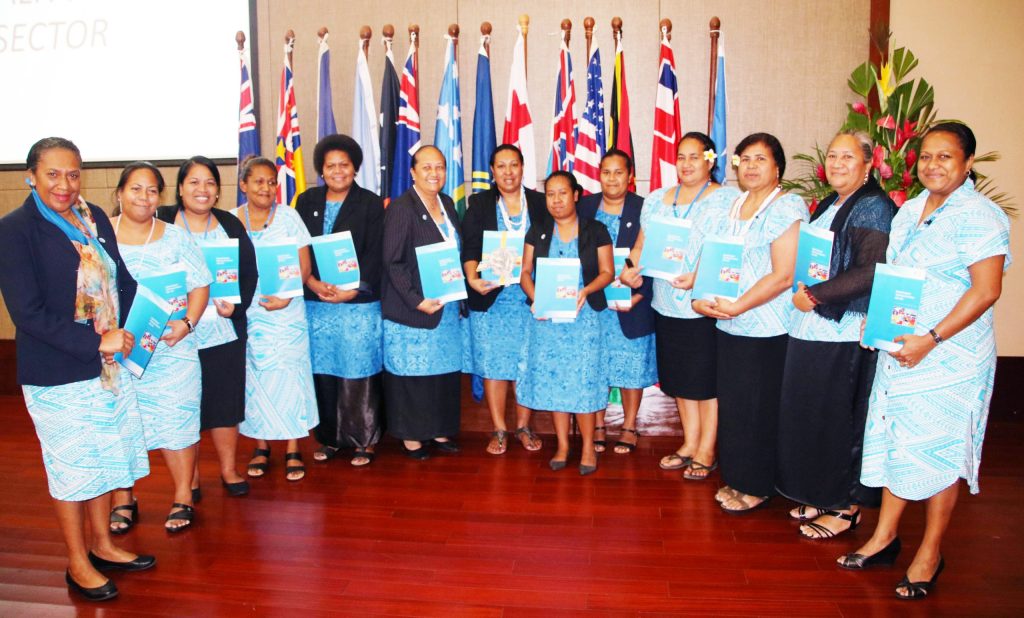
● Women in Maritime Association, Asia (WIMA Asia): Founded in 2010 and relaunched in the Philippines in 2015.
● Women in Maritime Association, Caribbean (WiMAC): Established in Jamaica in 2015.
● Arab Women in Maritime Association (AWIMA): Established in Egypt in 2017.
● Red de Mujeres de Autoridades Marítimas de Latinoamérica (Red-MAMLa): Founded in Chile in 2017.
● Women in Maritime of West and Central Africa (WIMOWCA): Focuses on maritime administrations and was founded in Ghana in 2021.
Collaborations with Other Partners
In addition to its direct efforts, the IMO collaborates with various organizations to further its gender equality initiatives in the maritime sector. One such partner is WISTA International (Women’s International Shipping and Trading Association), an international networking organization aimed at attracting and supporting women in management roles within the maritime, trading, and logistics sectors. WISTA was granted consultative status with the IMO in 2018, which enables the organization to contribute to discussions on increasing industry capacity and promoting diversity and inclusion.
WISTA’s mission aligns with IMO’s goals, especially in the areas of promoting gender equality and women’s empowerment. Through its partnership with the Global Environment Facility (GEF), UNDP, and IMO on the “GloFouling Partnerships” project, WISTA also helps bring female marine scientists and experts into conferences and project activities related to biofouling.
Conclusion
The IMO’s gender programme continues to play a pivotal role in supporting women’s participation in the maritime sector, working alongside regional networks and strategic partners to foster an environment of inclusion, opportunity, and empowerment. As the industry continues to evolve, these efforts contribute to narrowing the gender gap and ensuring that women have an equal opportunity to succeed and lead in the maritime community.